
Youth Advocacy
Our Mission
For over 30 years, the Youth Advocacy Division (YAD) has worked to ensure that every child from an indigent family in Massachusetts has access to zealous legal representation.
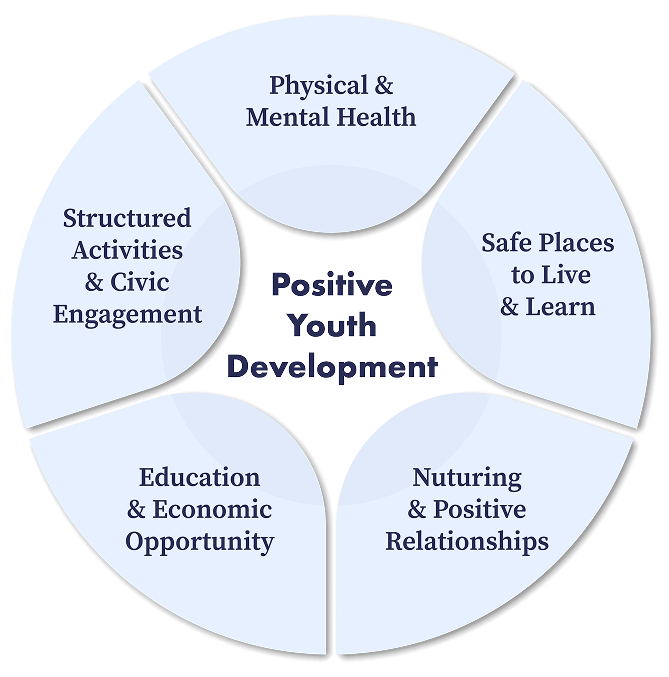
At the heart of YAD is the Youth Development Approach, which recognizes that real justice for young people means more than a fair trial – it means supporting their legal and life success.
Whole-Person Youth Advocacy
YAD staff attorneys, the juvenile defense private panel, social workers, and support staff work together to provide comprehensive services for youth facing legal challenges. We provide legal advocacy alongside conducting needs and strengths-based assessments and facilitating active agency and community partnerships. Our goal: To guide youth through the court process and beyond.
YAD also leads, trains, and provides oversight to a diverse, collaborative juvenile defense bar across Massachusetts. We proudly take a leading role in the fight against racial and ethnic disparities in the Commonwealth’s educational and juvenile justice systems.
Our Division Units
Trial Offices
YAD’s Chief Deputy Counsel and Administration provide leadership and strategic support to nine YAD trial offices across Massachusetts. Find contact information for each office and its staff in our directory.
Private Counsel Trial Unit
Most indigent young people under the age of 18 who are charged in delinquency cases are represented by state-appointed private attorneys. CPCS has trained and certified more than 300 of these attorneys – many of whom only focus on youth defense – to ensure young clients receive excellent representation.
CPCS-certified attorneys must meet rigorous performance standards, manage limited caseloads, and complete ongoing legal education, among other requirements. In every county, Juvenile Supervising Attorneys (JSAs) offer additional oversight and support, serving as liaisons between private counsel, the courts, CPCS, and partner agencies.
Grant of Conditional Liberty (GCL) Revocation Panel
After a young person is committed to the Department of Youth Services and serves their initial time in custody, they’re released under a supervision agreement known as the Grant of Conditional Liberty (GCL) – similar to parole. If a caseworker believes a youth is not following their GCL, they may initiate a return to custody and a GCL revocation hearing.
Under the direction of the Trial Panel Director, a specialized group of attorneys provide counsel to youth facing GCL Revocation.
Revocation Panel
Erica E. Cushna
Trial Panel Director
35 Congress Street
Suite 351
Salem, MA 01970
Melissa Ellis
Staff Counsel
1822 North Main Street
Suite 205
Fall River, MA 02760
Under the direction and supervision of the Trial Panel Director, YAD has a specialized panel of attorneys who provide counsel to youth committed to the Department of Youth Services who are facing a process similar to parole revocation, called GCL Revocation. The Revocation Advocacy Panel consists of trained and certified private attorneys across the state who represent youth for their GCL Revocation hearings.
Access to Counsel for GCL Revocation
In coordination with the Department of Youth Services (DYS), YAD offers counsel statewide to all youth that are committed to DYS and returned to custody for revocation of their Grants of Conditional Liberty (GCL). These youth — facing a proceeding essentially similar to parole revocation — are entitled by law to due process and fundamental fairness.
The Revocation Process
After youth are committed by the court to DYS and serve their initial time in custody, they are then released into the community under an agreement similar to parole which is called the Grant of Conditional Liberty, or GCL. The GCL includes conditions such as obeying all laws, attending school regularly, and staying in contact with the DYS caseworker. When a caseworker believes that a youth is not following the conditions of the GCL, he or she may decide to return the you to secure custody to face an administrative revocation hearing.
At the revocation hearing, a hearing officer will consider all evidence in determining whether or not the youth violated the GCL, and, if so, decide upon the amount of time the youth will spend in a secure facility. Revocation dispositions can vary from one night to six months. The youth has the opportunity to contest the alleged violations and the amount of time that DYS is seeking to hold him or her. The youth also has the right to appeal the revocation disposition.
At the revocation hearing, a hearing officer will consider all evidence in determining whether or not the youth violated the GCL, and, if so, decide upon the amount of time the youth will spend in a secure facility. Revocation dispositions can vary from one night to six months. The youth has the opportunity to contest the alleged violations and the amount of time that DYS is seeking to hold him or her. The youth also has the right to appeal the revocation disposition.
For information or advice regarding a GCL Revocation, please contact:
Erica Cushna
Trial Panel Director
978.219.5425
Melissa Ellis
Staff Counsel
508.484.5787
Carly Pederson
Administrative Assistant
978.219.5430
Revocation Panel Resource(s):
Social Service Advocacy
We are human services professionals bringing holistic education and experience from a range of social service fields who can be hired by court-appointed defense attorneys representing indigent clients across CPCS. We are expected to have a commitment to due process and client-centered representation.
In our roles, we provide strategic, litigation-focused, non-direct services to public and private defense attorneys under the Indigent Court Cost Act (ICCA). Whether an individual is a child, youth, or an adult, our work can improve a client’s chances of successful litigation.
Juvenile Appeals Unit
We are committed to providing our young clients with outstanding appellate advocates who are dedicated to building a strong professional relationship with each client, understanding their diverse circumstances, and to meeting their needs. Clients are represented either by a staff appellate attorney or private attorneys in direct appeals and screenings in delinquency, youthful offender, and juvenile murder cases.
If you are requesting an attorney to review a closed delinquency or youthful offender adjudication, murder conviction, or your sentence, please see below.
If you have a question or concern about your case, please contact Afton Templin, Director of Juvenile Appeals.
If you wish to file a complaint against your assigned screening or appellate counsel, please click here.
If you are a trial attorney and would like an appellate attorney assigned in the direct appeal of your case, please click here.
For information on How to Apply to YAD Juvenile Appeals Panel, please click here.
Direct Appeals
A direct appeal is a review by an appellate court of the trial court proceedings to determine whether the proceedings were lawful. Typically, direct appeals are from final judgments after a trial, conditional plea or a motion for new trial, but clients can seek “interlocutory review” of a trial court’s order in limited circumstances.
Any youth who was adjudicated delinquent or as a youthful offender, or convicted of murder or manslaughter, has the right to a direct appeal from a final judgment in Massachusetts. Because youth are indigent as a matter of law, the youth does not have to pay the expenses of the appeal, such as the transcript (the verbatim account of in-court proceedings), and is entitled to the appointment of counsel for the appeal at no cost.
An appeal argues that one or more errors occurred in the trial process. If these mistakes are serious enough, the appellate court will “remand,” or send the case back to the trial court, usually for a retrial. The appellate court does not hear new or additional evidence and does not decide guilt or innocence. Rather, the question the appellate court decides is whether the errors affected the outcome.
Attorneys representing youth on direct appeal meet with clients, review case files, write appellate briefs and argue cases before the Appeals Court or the Supreme Judicial Court of Massachusetts.
Screenings
Unlike a direct appeal, there is no automatic right to counsel to file post-trial motions in cases where the individual pled or where the direct appeal is over. But because the laws and procedures for juvenile cases are constantly evolving, YAD Appeals appoints “screening counsel” to investigate the facts and law to determine if the client would benefit from the assistance of counsel in litigating a post-trial motion.
The screening counsel’s role is limited to conducting an investigation. Screening counsel cannot represent the client in court unless YAD authorizes counsel to pursue a collateral attack of the adjudication, conviction or sentence.
Certain aspects of the attorney-client relationship exist between screening counsel and the client, such as confidentiality. However, screening counsel is not the client’s lawyer in the traditional sense, but is more akin to a legal and factual investigator. Once screening counsel has assessed the factual issues, counsel must apply the law and contemplate possible avenues of relief for the client. As a lawyer, screening counsel is bound by ethical constraints not to advance a frivolous claim.
Once the factual and legal investigation is complete, screening counsel drafts a screening report and submits it to YAD’s Juvenile Appeals Unit. YAD Appeals will then screen the case “in” or “out.” If screened “out,” YAD Appeals will notify the client of the decision, ending the screening process and the screening counsel-client relationship. If screened “in,” YAD Appeals will then authorize counsel to pursue a collateral attack of the adjudication, conviction or sentence.
Recently the Supreme Judicial Court, in Commonwealth v. Francis, 485 Mass. 86 (2020), held that if CPCS screens a case but declines to appoint counsel, any meritorious issue with legal precedent that was not raised during the screening process might later be waived. This decision may adversely impact indigent people who chose to file pro se motions. As such, if you or your loved one has a case you would like to have reviewed, please complete the YAD Screening Inquiry Form and email it to yadappeals@publiccounsel.net.
EdLaw Project
We advance education advocacy by addressing one of the root causes of the school-to-prison pipeline: children being pushed out of or failing in school.
The mission of the EdLaw Project is to Shut Down the Cradle-to-Prison™ Pipeline in MA by ensuring that our state’s most vulnerable students receive a stable and quality education through expert holistic, individual, and systemic racially-conscious, student-directed advocacy. Our focus is to provide court-appointed attorneys and social workers with the skills and tools they need to support the educational needs of their clients. We also provide legal representation for students in school discipline, special education, school stability and other areas of education law.
The EdLaw Project is supported in partnership with the Youth Advocacy Foundation, Inc. For more information, please visit www.youthadvocacyfoundation.org.
For advice on an education matter, call our HelpLine at (617) 910-5829 or fill out our intake form.
Apply to Juvenile Appeals Panel
The Youth Advocacy Division is committed to providing our clients with excellent appellate advocates who are dedicated to building a strong professional relationship with each client, understanding their diverse circumstances, and to meeting their needs. YAD strives to meet these goals by recruiting and maintaining a diverse and inclusive panel of private attorneys who represent a broad range of human difference and experience.
Qualifications
Applicants must be a member in good standing of the Massachusetts bar and possess the following minimum qualifications:
- Demonstrated proficiency in legal research and writing;
- Demonstrated commitment to working on behalf of youth and emerging adults;
- At least one of the following:
- One year of trial experience with adult criminal defense, delinquency, youthful offender, juvenile murder, Children and Family Law, SORB, SDP or Mental Health litigation;
- Primary authorship of one or more thoroughly researched and well written appellate briefs;
- A recent judicial clerkship, substantial editing experience for a law journal, primary or ancillary authorship of a law journal article, or other substantial legal research and writing experience;
- Other relevant life or legal experience that has provided the applicant with a unique or personal perspective on juvenile defense work.
Admission are based on qualifications and current availability of mentors, such that not all applicants who meet minimum qualifications will be admitted.
Application Submission Instructions
For more information on more training opportunities, or if you want to be considered, please email Afton Templin, Director of Juvenile Appeals, at atemplin@publiccounsel.net.
Required Training
Admitted applicants must attend a Juvenile Appeals Certification Training.
Certification is based on successful completion of the training course. Attorneys who have successfully completed the course training requirements are provisionally certified and assigned a mentor. The Director of Juvenile Appeals may grant a waiver of the mentor requirement in some circumstances. During the period of the attorney’s provisional certification, the attorney must adhere to the YAD Appeals Performance Standards and work cooperatively with their mentor as required by the Juvenile Appeals Mentor Program. The mentor will periodically report to the Juvenile Appeals Unit about the attorney’s progress towards full Juvenile Appeals Panel certification.
Attorneys certified for juvenile appellate assignments may receive assignments in juvenile delinquency and youthful offender appeals, juvenile murder appeals, screenings for collateral motions (new trial, relief from unlawful restraint, revise and revoke), sentencing appeals and other post-adjudication matters. An additional certification process is required to receive juvenile murder appeals.
Resources for Clients
Explore dedicated resources for court-involved youth and their families.
Resources for Attorneys
CPCS provides materials to assist youth defense attorneys, including practice guides, legal outlines, and sample motions in our Resource Center.